Give me three sports only Australia plays
- Australian Rules Football
- Trugo
- downball
Sports Australians play but you don’t play in your country.
- baseball
- touch football
- downball
Work in groups and discuss these questions:
- Look at the poster and the quote. What does it tell you about surfing in Australia? What do you think are the reasons for this?
- Have you ever surfed? If so, tell your groupmates about it. If not, would you like to try?
Our answer:
- popular, as a recreational activity. Reason is that Australia is a coastal country with great waves.
- No, but we want to try it and some people tell me that they are afraid of sharks.
There are no beaches in our hometown for us to surf.
Beach Culture
image:
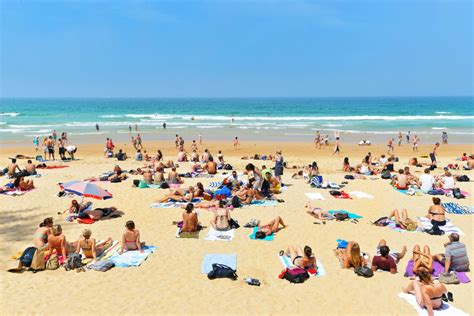
There are small talk, sit in the sun
- sunbathing / tanning
- relaxing in their free time
- making sandcastles
- chatting / socialising
- chilling
- a deep ____ for the ocean
- a _____ of national unity
- a _____ of self-expression
- a _____ to defy traditional values
- a strong _____ of community
| form | love | sense | symbol | way |
- love
- symbol
- form / way
- way / form
- sense
The title of the article is Riding the waves of culture: the evolution of surfing in Australia. Considering this, what do you think the article will be about:
- Explaining reasons why surfing is popular in Australia
- Explaining the historical development of Australia’s surfing culture
- Describing surfing in Australia
My answers:
- Number 2.
Activity 1 Prepare to take notes
At the end of this week, our speaking task will ask you to answer the following question:
What is the relationship between sports and national identity in Australia?
(What do the three texts say about the relationship?)
You will need to take notes from our reading and listening texts this week and then use this information to help you write your answer.
Analyse the question:
- What are the key topic words in the question? What do they all mean?
- Are there any limiting words (these words narrow the focus of the question)?
- What do you have to do to answer the question?
- What information will you need from this source (Davis, 2024)?
Answers:
- Sports and national identity. national identity mean that how people accept their country.
- australia
- explain the key word, compare them and talk about relationship between them. Finally I need to find people of different generations have different views on this issue
- Different in different generations.
– :hyphen(连字符),也可叫 dash(短横线)
> :greater than sign(大于号)
–>:right arrow
Timeline of the evolution of surfing in Australia
| Details of events | Time or time period |
| A famous swimmer surfed for an audience, popularising the sport Surfboards were often made from wood or plywood | 1. 1915 |
| Rules limiting surfing during work hours had to be changed Beach culture was seen to represent national unity | 2. 1950 |
| Indigenous Australians fished, swam, and body surfed | 3.always |
| Australian surfers celebrate their sport at global events Beach life and surfing are important in Australian culture | Today |
| Authorities allowed people to swim during the day Later, surf clubs helped to reduce the number of people who drowned | 4. 1903 |
| Surfing created an identity, which was captured in popular culture | 5. 1960 |
| People who visited the beach in hot weather were often unable to swim | 6. 1800 |
| A noun phrase consists of a noun, which is called the _____, and any dependent words _____ or _____ the head.Dependent words give specific information about the _____. |
- head noun
- before
- after
- main noun
名词短语 = 核心名词(head)
- 放在 前面或后面 的 修饰词(dependent words)
这些修饰词是为了提供更多关于核心名词的信息。
Look at this summarized information about noun phrases.
| For our analysis, a noun phrase … | consists of three components: article / adverb / adjective + head noun + preposition phrase (premodifier) (postmodifier) MUST contain a head nounMUST contain EITHER a premodifier OR a postmodifiercan be either the subject or object of the sentence |
Find further examples of noun phrases in the article. Check that the examples you find match the information.
🧱 名词短语由三部分组成:
| 部分 | 名字 | 解释 | 示例 |
|---|---|---|---|
| article / adverb / adjective | premodifier 前置修饰语 | 放在名词前面修饰它 | the big house / very fast car |
| head noun | 核心名词(必须有) | 这个短语的中心词 | house, car |
| prepositional phrase | postmodifier 后置修饰语 | 放在名词后面继续描述 | the car on the street |
📝 结构:
👉 [前置修饰] + 名词(head noun)+ [介词短语后置修饰]
📌 名词短语必须符合三个条件:
- 必须有 head noun(核心名词)
- 必须至少有一个修饰语(要么前置 premodifier,要么后置 postmodifier)
- 可以做主语或宾语
✔ 示例验证
| 名词短语 | 解释 |
|---|---|
| the large building in the city | “building” = head;“the large” = 前置;“in the city” = 后置 |
| green cars | “cars” = head;“green” = 前置;没有后置,但符合规则(至少一个修饰) |
| students in my class | “students” = head;“in my class” = 后置 |
🔍 最后一句话的意思
Find further examples… Check that the examples you find match the information.
意思就是:
让你在文章里继续找符合 这三条规则 的名词短语,并检查它们是否真的具备 head noun + 前置或后置修饰。
Australia is famous for beautiful beaches. They attract many tourists every year who come to enjoy the infrequent experience. However, sometimes beaches get very crowded, and this can be a problem. In addition, pollution can affect the water quality at the beaches. The government is trying to solve these problems by introducing more laws.
 一息不存,道将来契